The Guide To Upgrading Windows 7 And Office Licensing.
Windows 7 was no longer supported, which was the end of the age of licensing software. For individuals and businesses clinging to `windows 7`, the upgrade path to Windows 11 is not a simple re-installation–it's a migration to a fundamentally different digital paradigm. The change is encompassing all aspects of your Windows 11 experience, from how to purchase your windows lizenz up to how you work with Office and protect your computer. The traditional world of one-time purchase, physical media and software suites that were isolated is now replaced by cloud-integrated subscriptions and digital licenses, and ecosystem-wide security. To navigate this change, you must understand the ten most important intersections between traditional practices and modern necessities and where the choices you make regarding your OS directly impact your security, productivity suite and future scalability.
1. Hardware Gauntlet. Your first and non-negotiable action.
Windows 11 hardware needs to be installed before you consider buying it (TPM 2.0 and Secure Boot with a modern processor). This check will fail many Windows 7 machines, particularly ones that are older than 2017. This isn't an attempt to make a Microsoft cash grab, it's an important security mandate. These are the "hardware foundation for trust" that the latest security products, such as Windows Defender, and third-party applications like Kaspersky premium, depend on. The attempt to override these restrictions with unofficial ISO modifications can result in an unreliable, incompatible system that nullifies the core security advantages of the upgrade, leaving you at risk than Windows 7.
2. License Migration Myth – Your Windows 7 key is (mostly) out of date
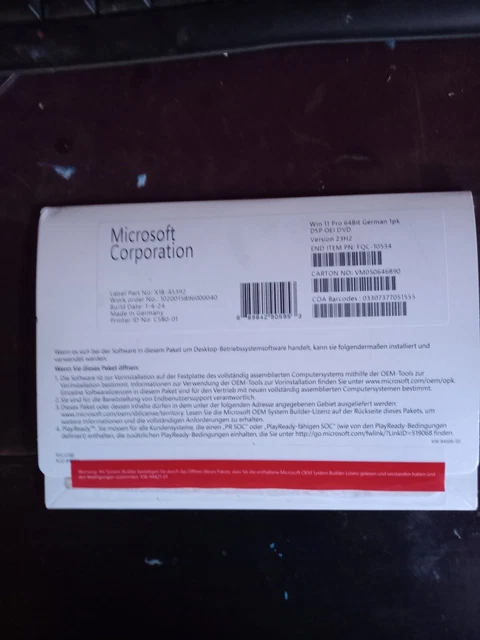
In the past, it was possible to utilize the Windows 7 Pro activation key to activate Windows 10. That grace period is effectively over for Windows 11. If your existing Windows 7 license is not up-to-date, it will have no benefit in upgrading to Windows 11 on the same hardware. It's a new beginning. This means that your search for `windows 11 lizenz buy is a fresh procurement process that requires you to comprehend the modern OEM vs. Retail market starting from the beginning.
3. The Office Licensing Revolution.
You're likely to have an 'office lizenz' if you're using Office 2010 on Windows 7. Office 2021 is the modern equivalent. It is updated with security patches but no new features. Microsoft 365 has become the upgrade route for productivity. This is a big shift. You aren't just upgrading Office. Instead, you adopt a cloud ID (Azure Authentication) and get 1TB of OneDrive Storage, and allow real-time collaborative capabilities. It's time to reevaluate your previous practice of purchasing office lizenz once every 10 years to take advantage of ongoing costs that include updates and services.
4. Security Should Not Be an Afterthought. Change a Paradigm.
Windows 7 probably had you using a third part antivirus like Norton 360. Windows 11 completely changes the environment. Windows Security Defender, the integrated security software in Windows 11 is a premium solution that is integrated with cloud-based services. Installing an older third-party application can cause conflicts and impact performance. It's best to review your options when upgrading. Do you really require a separate antivirus suite like "kaspersky premium" or is Defender's combination with the new hardware security features sufficient? Your answer will depend on the threat model you are using. However, the notion that you need to buy separate antivirus software is no longer the case.
5. The "Clean Install" Imperative and Data Migration Strategy.
The upgrade in-place of Windows 7 to 11 is not supported and can cause for instability. This should be a complete new installation. This will force you to transfer your data in a systematic method. It's the best time to stop backing up local drives and adopt the cloud-based strategy. Microsoft 365 includes OneDrive. The setting of Known Folder Move during setup (to backup Desktop, Documents and Pictures) changes your data migration into a seamless, cloud-synthesized, ongoing process. Your data moves from being PC-locked to user-centric.
6. The Professional Feature Crossroads – Pro is the latest minimum.
Windows 11 Pro has to be purchased if Windows 7 Professional was used to host BitLocker hosting domain joining, Remote Desktop, or BitLocker. It is not a good idea to utilize Windows 11's home key for business or professional use. Home isn't able to join domains. It doesn't have BitLocker security as well as the Group Policy Editor. For anyone moving from Windows 7 Pro, targeting Windows 11 Pro via a Retail license or Microsoft 365 Business subscription is the only way to maintain professional features and data security.
7. Beware the Grey Market siren call During Transition.
The excitement to upgrade and the sticker shock triggered by new licenses is forcing many to seek out a bargain Windows11 OEM key on the grey market. This is a grave error to make during a time of transition. These keys are unreliable and can leave you with an illegitimate base, even as you're constructing a new system. By investing in the purchase of a Retail license or subscription, that includes Windows, (like Microsoft 365 Business) can provide peace of mind as well direct support and a path to upgrade in the future. The cost of a grey-market important factor is the loss of your time and data once it's deleted.
8. Future-Proofing with the Cloud: The Server Connection.
Windows Server 2025 will be your preferred server in the event that your Windows 7 system was a part of an internet domain. Modern integration here requires not just Windows 11 Pro, but as well as a knowledge of calswhich are essentially cals' (Client Access Licenses). The cloud solution is Azure Active Directory, included with Microsoft 365 Business plans. It's crucial to look at your options when upgrading to Windows 7. Do you decide to invest in on-premise licenses and servers, or will you migrate to cloud identity and device (Intune) that is accessible through subscription. The pricing structure for licensing and the cost for each of these options are different.
9. Driver Archaeology: The need to have an Modern Hardware Base
Windows 7 was built on the old drivers library. Windows 11 relies primarily on modern cloud-based drivers via Windows Update. Windows 7 is often the only device which can run specialized hardware. Upgrade assessments must include hardware compatibility testing. It is often the case that the upgrade is actually requiring new hardware. Thus, a new computer that comes pre-installed with Windows 11 OEM is the most efficient stable, reliable, and long-lasting option.
10. A Shift in Philosophy from Ownership to Access and Management.
Upgrades to Windows 7 are a shift in the way you think about it. The upgrade is about moving away from a model of owning static software (`windows 7` DVD, Office 2010 box) to one of subscribing to a constantly upgraded service or buying a digital license with strict transfer guidelines. Your security strategy changes from an antivirus that you can bolt on to a complete hardware-backed defense. Your data is moved from local storage to cloud identity. Accepting the whole-of-life change by using genuine Windows 11 Pro licensing, a Microsoft 365 membership, and taking advantage of the modern security is the only way to ensure that the upgrade offers not just a brand new OS but also a dependable and manageable computing platform for the coming decade. Take a look at the top windows 11 kaufen for blog tips including micro soft outlook, ms visio, microsoft office software key, office2019 download, microsoft office software key, office 2019, office2019 download, office 2016 software, ms office 2016, office 365 office key and more.

Understanding Windows Server 2025 Client Acces Licenses (Cals), And How They Affect Businesses.
If you are a business that is growing installing a Windows Server 2025' represents a huge advancement in capabilities, transforming from a peer-to-peer system to a centralized, managed IT infrastructure. The most expensive and frequent mistake is not the server software, but the need for Client Access Licenses (or Cals). This isn't an option, it's an essential component of the Microsoft ecosystem. Failure to properly license access to clients can make a project fail or result in severe sanctions during an audit. This can also result in a complicated web of dependencies that affects everything from the operating system for your desktop you select to your productivity and security tools. This guide will help you understand the ten important, interconnected principles that every business must be aware of in order to prepare for Windows Server in 2025. It also shows how licensing server software dictates desktop structure and legality.
1. The Server License: It is only the fee for entry.
When you buy the "Windows Server 2025" license, it grants you the right of installation and use on a live or virtual machine. It is important to know that this license doesn't give the device or user access to. It is a separate right that must be bought via CALs. Imagine buying a server license for renting a venue and stage. You'll need the CAL tickets for each and every individual (User Cal) or device(Device CAL) regardless of whether they are watching the performance or sitting in the back.
2. Cals and Desktop OS: A pair that can't be separated.
It is illegal to make use of a CAL on clients running an illegitimate OS. If your company workstations are activated with grey-market `windows 11 OEM' keys purchased from a `windows 11 lizenz kaufen` discount site, purchasing legitimate CALs for the same is a contradictory, ineffective action. Microsoft's licensing requirements require that clients are licensed with the right OS. An audit will first invalidate the desktop licenses, making the CALs–and potentially the server access itself–non-compliant. All your stacks, from desktop to server, should be clean.
3. The Choice Between Device CAL and User CAL Modeling the Workforce.
This is a strategic choice with financial implications. A User CAL permits the user (e.g. the desktop or laptop t tablet) to access the Server via any number(s) of devices. A Device CAL grants access to a certain device (e.g. workstations shared across factory floors) for any number of users. The most cost effective choice will be based on your use patterns. Utilizing User CALs is better when you have an employee on the move who uses several devices. Device CALs can be cheaper when shift workers share dedicated terminals. It is important to model the actual use. Combining different types is possible however it can make management more difficult.
4. Windows 11 Home is technically and legally incompatible.
A computer that runs Windows 11 Home cannot natively join an existing Active Directory domain, which is the core purpose of Windows Server. Even if a different technical solution was to be employed, this would constitute an infringement of the license. To avoid this, all devices that require authentication or other services (such the file share printer queues, file share, etc.) must run Windows 11 Pro, Education, Enterprise, and/or Enterprise editions. from a `windows server 2025needs to run Windows 11 Pro, Enterprise or Education editions. This is why it's a poor decision to buy the Windows 11 home key for any machine in a business in the event that plans are made to deploy servers in the near future.
5. The Security Management Nexus.
A Windows Server environment properly configured with CALs, enables for the centralization of deployment of security policies through Group Policy. The cost and burden associated with managing security products that are standalone could be drastically reduced. For example, instead of manually setting up kaspersky or norton 360 on every 50 computers, you could apply policies to ensure consistent settings. Utilizing the server to act as a management platform, you can increase the value of your security of your endpoints more effective and efficient. The CAL is a type of license that allows managed connections.
6. Office License Synergy within a Server Environment
Your users will most likely be able to access documents shared by your windows 2025 server. Microsoft 365 subscriptions are more expensive than office lizenz, which is per-permanent Office 2021. Microsoft 365 Business Premium/Enterprise comes with Azure AD that can sync up with your Active Directory on-premise, as and Intune, for device management. It is a hybrid Identity Model which simplifies secure access to resources on the cloud (Microsoft 365 apps) and on-premise (Server 2025) The subscription provides an easy integration process in comparison to standalone perpetual licenses.
7. Alternative License for Public Access "External Connector".
CALs can only be used for internal devices as well as users. If you are providing access to your server to external users (e.g. customers logging in to a website hosted on your servers, or using anonymous FTP clients) You are not able to use CALs. Instead, you must purchase a Windows Server External Connector license (EC). This is a flat-fee license which is tied to the server that allows unlimited, anonymous external user access. Knowing this distinction will help prevent massive compliance violations for public-facing deployments of services.
8. CALs may be version-specific however they're compatible with subsequent versions.
You buy CALs to access a specific server version (e.g., Windows Server 2025 CALs). These CALs can be used to connect to servers running the version in question or any prior version. Therefore, 2025 licenses can be used to access servers in 2025, 2022, or 2019. The CALs aren't functional for future versions. You'll need to buy an CAL set to use "Windows Server 2029" after you upgrade. It should be part of the long-term IT planning.
9. Virtualization and CALs. The "Every Access" rule.
Virtualized environments have the identical CAL requirements, but they are based solely on access. The VM isn't included. You will need 50 User CALs if you have 50 users accessing an online file sharing platform that is running on a virtualized version of "Windows Server 2025". (Or sufficient devices CALs for the devices used by the 50 users). The CAL requirements you need aren't multiplied by the number virtual servers you have in place; they are multiplied by the number of users and devices that access the virtual machines. This transparency prevents the over-purchasing of CALs in complex virtual setups.
10. The Total Cost of Ownership (TCO) Realism: Beyond the Server Sticker Price.
Business case for Windows Server 2025 must include the entire licensing stack comprising the server's license as well as all required CALs. All client PCs are required to be updated to Windows 11 Pro if they have not been. Comparing a cloud alternative (such as shifting file shares onto SharePoint or using Azure Active Directory) requires you to calculate the initial capital cost (CapEx) as well as the ongoing cost of maintaining a physical server. Cloud-based services are typically cost-effective for mid- and small-sized businesses than servers, hardware and licensing for Windows Server 2025, cals and the Windows 11 Pro upgrade for all fleets. The choice is economic and architectural, not merely technical. Check out the recommended cals for website advice including windows and office, office 2016 software, windows server 2016 os, microsoft office download, visio software download, microsoft visio, windows server os, windows server os, office 365 office key, windows server os and more.